






Tuesday, October 04, 2005
Rosh Hashana ~ The Feast of Trumpets

We have entered into my favorite time of the year, the season of the Fall, the time of the Lord's High Holy Days. For a great overview of this celebration, and its significance to us, as the Redeemed of the Lord, please check out this link, which has many excerpts from the book, A Family Guide to the Biblical Holidays, which I have found to be MOST helpful to us in our endeavours to learn more of, and partake in, our Hebraic Heritage over the years. Rosh Hashana is a time for contemplation and reflection upon the year now passed, a time for setting our houses in order, for conscientiously making sure we are in right relationship with our brothers and sisters, and for remembering our King - above all else. It's a time to spark and engage the imaginations of our children. On this day, we remember the creation of the universe by Adonai!
We're making honey cake today, and have begun our yearly immersion into studying these festivals anew, as we celebrate our Lord and Messiah, basking together in His fulfilled promises to save us, and His much anticipated return!!
Every year I, we as a family, learn more of each Biblical holiday we study. Here, I thought that I'd share some more about Rosh Hashana and the Days of Awe, written from a Christian perspective.
***********************************************************************
The Ten Days of Repentance
As mentioned above, most people are neither entirely righteous (tsaddikim) nor entirely wicked (resha’im) on the day of Rosh HaShanah. The Aseret Yemei Teshuvah, or Ten Days of Repentance, provide a time for us to repent and turn whole-heartedly to the LORD in order to be sealed into the Book of Life. These days set the tone for the coming most holy Day of Atonement.
The Christian and Rosh HaShanah
There are many things the Christian can learn from the Jewish observance of Yamin Nora’im and Rosh HaShanah that are helpful in our walk as talmidim of the Mashiach Yeshua.
First, the month of Elul and the preparation for Rosh HaShanah reminds us to be ready for the soon appearance of Yeshua our LORD. Though we do not know the exact day or hour of His return to possess His kingdom on earth, we are commanded to watch and be ready for His soon appearance. We ought, therefore, be in a constant state of repentance as we seek to humble ourselves and walk with our LORD.
Second, Rosh HaShanah itself, or rather Yom Teru’ah, has prophetic significance in the life of the Christian. The blowing of the shofar is prophetic of the rapture of the church, where those who are part of the Bride of Mashiach, the church, will experience everlasting transformation:
“Behold, I show you a mystery; We shall not all sleep, but we shall all be changed, in a moment, in the twinkling of an eye, at the last trumpet (shofar): for the trumpet (shofar) shall sound, and the dead shall be raised incorruptible, and we shall be changed.” (1 Corinthians 15:51)
Third, the Tashlikh ceremony reminds us that our LORD is a God of new beginnings, and even if we have sinned and fallen away from Him, He is faithful to restore us and cast our sins away from us. After all, God sent His only Son Yeshua to be our Sin-Bearer and Kapparah, so we can take comfort in His forgiveness when we earnestly seek to repent from the harm we have done and begin anew with God.
Fourth, we should be grateful to the LORD for writing our names in the Lamb’s Book of Life, or Sefer HaChayim. Of course we do not believe that we are made acceptable in the LORD’s eyes by means of our own works of righteousness (Titus 3:5-6), but that does not excuse us from being without such works (as fruit of the Ruach Hakodesh in our daily life).
Finally, we anticipate the prophetic fulfillment of the LORD’s covenant faithfulness to Israel when we understand that the Yamim Nora’im foreshadow the future repentance of national Israel in the days to come. Yom Kippur is the Holiday that pictures the full restoration of Israel to all her covenant promises. The B’rit Chadashah will be embraced and Yeshua will be revealed as Israel’s Savior, LORD, and Deliverer.
Terms relating to Rosh HaShanah:
Elul - The month preceding the month of Tishri and set apart as a season of repentance and preparation for the Days of Awe.
Selichot - Penitential prayers said during the last week of Elul.
Erev Rosh HaShanah - The evening before Rosh HaShanah marked by additional services at the synagogue.
L'Shanah Tovah Tikatevu - This phrase is a customary greeting on the Jewish New Year and means "May you be inscribed (in the Book of Life) for a good year!” and is sometimes shortened to "Shanah Tovah":
Rosh HaShanah - “The Head of the Year.” The Jewish New Year. Celebrated on Tishri 1 and 2.
According to the Rabbinics, there are actually four “New Year’s Days” in the Jewish calendar:
Nisan 1 - The Biblical New Year, sometimes called New Years Days for kings
Elul 1 - The New Years Day for tithes
Shevat 15 (Tu B’shevat) - The New Years Day for trees
Tishri 1 - The New Years Day for years and the beginning of the Days of Awe
Yom Teru’ah - The “Feast of Trumpets” and progenitor of Rosh HaShanah. Teru’ah means a loud noise either by blowing a shofar (e.g. Lev. 25:9), silver trumpets (Numbers 10:5-6) or by shouting (Psalm 100:1).
The purpose of Yom Teru'ah was to shout unto the LORD in prayer -- similar to the idea expressed in the Psalms such as “Shout unto God with a loud voice!”
(Psalm 47:2).
Tashlich - (“casting off”) A traditional ceremony in which individuals symbolically cast their sins into a body of water. We walk to flowing water, such as a creek or river, on the afternoon of the first day and empty our pockets into the river, symbolically casting off our sins.
Shabbat Shuvah - The Sabbath that falls during the Ten Days of Repentance, usually observed by listening to sermons about repentance in the synagogue. Shabbat Shuvah is called the “Shabbat of Return” because its special haftarah reading begins with the words Shuvah Yisrael “Return O Israel,” from the prophecy of Hosea.
Tzom Gedaliah - the Fast of Gedaliah, one of the minor fast days.
Yamim Nora’im - The Days of Awe or the High Holy Days.
Chet - Literally: "missing the mark"; a Hebrew term for sin.
Teshuvah - Literally: "returning"; a Hebrew term for repentance.
Machzor - High Holy Day prayer book.
Yom Kippur - The Day of Atonement and Judgment on Tishri 10.
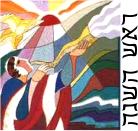
Blessings for Rosh Hashana ~ A Home Ceremony ~
***********************************************************************
What Makes the High Holy Days High?
I don't know about you, but each year at this time I have to remind myself just why the upcoming holidays are called the High Holy Days. After all, many of the biblical holidays seem as special as these.
At Passover we ask, "Why is this night different from all other nights?" Perhaps Passover should be a high holy day. In the winter, we enjoy Hanukkah-menorahs, potato latkes, dreydels, eight days of gifts. It's a pretty "high" time. Why not call Hanukkah a high holiday? Purim, with its parties, plays, carnivals and hamantashen is certainly an up time. We get silly and have a pretty "high" celebration. Why isn't Purim considered a high holiday?
Why do we call only Rosh HaShanah and Yom Kippur High Holy Days? What makes the High Holy Days so high?
Rosh HaShanah, which literally means "Head of the Year," isn't a High Holy Day because it's considered the Jewish New Year. It's nothing like December 31 with all its revelry. So, as a New Year's celebration, if it leaves so much to be desired, why call it "high"?
It's "highness" is found in the real meaning of the day. The name Rosh HaShanah is not found in the Bible, but in Jewish tradition. The biblical name for this day is Yom Teruah, "the Day of the Blowing" (of the shofar, the "ram's horn").
The shofar blew to warn the people of Israel of danger, to call the congregation to worship, to announce a fast, but most importantly, to awaken the people to repentance. Rosh HaShanah is a "high" holyday, not because it has become the traditional New Year's Day, but because the sound of the shofar was heard and the people were called to the higher activity of appreciating the kingship of God.
Yom Kippur, the second High Holy Day, is the annual time the nation of Israel had their sins atoned for. The day was accompanied by animal sacrifices, an awesome ceremony by the High Priests, and a general sense of relief when the sacrifice was offered and atonement was made. But there is no more Temple, no sacrificial system. So why is it still called "high"?
Even without the Temple and the sacrificial system, the concept of atonement, of having ones sins forgiven, was maintained in the diaspora. The foundation was laid in the Torah; the actuation occurs every day. Thus, we fast on Yom Kippur as a reminder of the sacrifices in ancient days. This, too, is a high activity, and thus Yom Kippur became one of the High Holy Days.
The ten days between Rosh HaShanah and Yom Kippur are called the "Days of Awe," the Yamim Nora'im, days in which to make amends with those whom we have wronged in the past year-especially God. Having spent time before Rosh HaShanah examining one's life (traditionally, the entire month before-Elul-is used for this purpose), when the shofar sounds we begin seeking reconciliation with those we have wronged in the past year.
On Yom Kippur, when the final shofar blast is heard, we symbolically see the gate (ne'ilah) of heaven closed for another year. Hopefully we've made amends with all those we've wronged and will find ourselves written in the Book of Life for another year. The Days of Awe add to making the High Holy Days high.
During this season, the routines of life-making a living, raising the children, enjoying a hobby-are downplayed in deference to considering the kingship of God and his rule in our lives. That's why these two holy days and the days in between, although not described as "more important" in the Bible, have been elevated to the status of the "High Holy Days." The rabbis understood just how important repentance, reconciliation and atonement were. We who are Messianic know that we have all of this through Yeshua. May our observance of the High Holy Days be truly high this year.
~Rabbi Baruch (Barry) Rubin
Read more about the historical significance of, and how to celebrate the High Holy Days here.
"Chag Sah-meach Yom T’ruah!"
(Happy Festival of the Day of the Awakening Blast)
*****************************************************************
Shofar
------
There are things that are important for us, so we speak about them.
There are things very important to us -- and so words flow out from us, bursting with emotion, meaning and depth.
And then there are things that shake us to the core. The core of our being does not wait for the mind's permission or for the right words -- there are no words that can contain it. It breaks out in a cry, in a scream and in silence.
This is the sound of the shofar: A crying voice, not even of a human being, but of an animal's horn. We need the animal -- not for its coarseness, but on the contrary, because we need to express something so sublime, it cannot find words; so essential and unbounded, the mind can neither fathom it nor hold it back.
The very core of our souls needs to cry, "Father! Father!"
A Daily Dose of Wisdom from the Rebbe
-words and condensation by Tzvi Freeman
Elul 29, 5765 * October 3, 2005


|
|